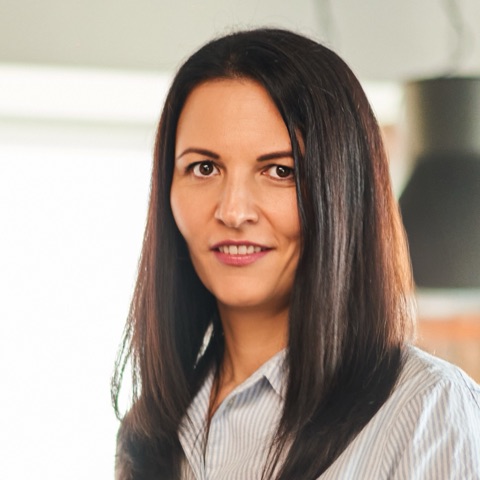

Customer First, Security Always. Magdalena Tchórzewska on Frontline Empathy
In the world of complex security systems, it’s easy to forget that behind every deployment, outage, and server stands a real human being. When critical access fails across the infrastructure of a bank or telecom operator, technology alone is not enough. In those moments, what truly matters is composure, response time, and the ability to manage intense stress. Magdalena Tchórzewska, Director of Customer Operations at Fudo Security, combines a strong technical understanding with a customer-first mindset and a focus on the people who rely on technology every day. Yet her path into cybersecurity was anything but a straight line – it was a series of unexpected twists that ultimately shaped her approach to operations management.
Magdalena opens up about the reality of working on the front lines of technical support, confronting gender stereotypes in the tech industry, and why deliberately slowing down is often the most effective defense against online manipulation.
An Accidental Path That Turned into Passion
Magdalena’s entry into tech was a series of coincidences and unexpected pivots. Finishing high school, her sights were set on studying economics. Even though her father worked as an IT specialist at a bank and computers were a constant presence at home, computer science was never her primary choice. She submitted an application to a local university merely as a safety net. When she missed out on her dream economics program, she felt profound disappointment. Reality, however, quickly reshaped those feelings.
“I caught the bug pretty quickly. Even though university wasn’t always easy, uncovering the knowledge step by step gave me immense satisfaction. What captivated me about computer science was that when you build something, you immediately see a tangible, verifiable result,” Magdalena recalls.
Graduating with a degree in computer science, she envisioned a career as a software developer. Once again, life had other plans, and she landed her first job in technical support. For someone naturally introverted, real-time customer interaction – conducted in a foreign language – proved to be an enormous challenge.
The initial stress was intense. Calls were recorded and reviewed as part of the quality process. Yet, through disciplined effort to hone her communication skills, confidence followed. Magdalena also discovered a value in support work that pure code could never deliver: a direct, human impact. She realized that technology does not exist in a vacuum. Its true purpose is to protect processes, data, and above all, the people who rely on them. Transitioning from general IT to cybersecurity became the natural evolution of that philosophy.
Calming Emotions in a Crisis: Taking Control of Chaos
Technical support for Privileged Access Management (PAM) carries an exceptional weight of responsibility. When a customer calls with an incident, the stakes are critical: locked-out access to hundreds of machines or major business processes being disrupted. Magdalena sometimes jokes that Customer Operations can feel a little like being a psychologist: first you listen, separate emotions from facts and only then start looking for the right solution.
The approach Magdalena and her team take is defined by a simple principle: “Customer first, security always.” This doesn’t mean blindly assuming the customer is always right; rather, it means striving to understand the root cause of their pain before executing a single command.
“Before I start solving a problem, I want to understand why this specific situation is so critical to the customer. Behind a phrase like ‘this has to work right now’ there may be users unable to work, an important deadline or simply someone under a lot of pressure. When a person on the other side is angry or speaking more sharply than usual, it is important not to take it personally. Very often it comes from stress, pressure or a feeling of helplessness. If you mirror those emotions and immediately become defensive, the situation only gets harder.” Magdalena explains.
In a crisis, mastering chaos comes down to transparent communication built on three concrete pillars:
- What happened? – Clearly defining the core problem from the customer’s perspective.
- What are we doing right now? – Providing a clear, structured, step-by-step action plan.
- What happens next and when will the customer hear from us again? – Establishing realistic timeframes or regular checkpoints.
Even if an immediate technical resolution isn’t readily available, a sense of control and the knowledge that a capable partner has taken charge dispels the initial wave of panic. In cybersecurity, true trust is forged when things go wrong.
Working with people can drain emotional batteries quickly, but it can recharge them just as fast. Sometimes a simple message from a customer – “thank you, you really helped us” – is enough to change the feeling of an entire difficult day. For Magdalena, those moments are a reminder of why the human side of the job matters so much.
Turning Customer Feedback into Better Products
Customer Operations also gives Magdalena a broader view of the customer journey. A support ticket is rarely just an isolated technical issue. It may connect to expectations set before the sale, the way the solution was deployed, missing documentation, a process gap or a product limitation.
“The customer often tells us what they want. Our job is to understand what they actually need. A request for a specific feature may really be a request to solve a completely different problem.”
This is where Customer Operations becomes a bridge between Support, Presales, Professional Services, Sales and Product. One request may be an isolated case. But when similar feedback starts appearing across customers, partners and different teams, it becomes a signal worth looking at more closely.
For Magdalena, this broader perspective is one of the most interesting parts of the role: connecting the dots between technology, business processes and the people using the product.
Finding Your Place in Tech
Earlier in her career, Magdalena occasionally encountered situations where she felt that gender influenced how technical competence was perceived. Rather than turning those experiences into a defining part of her career, she treated them as a reminder to build confidence in her own expertise and to look for environments where people are evaluated by the quality of their work.
Even today, subtle assumptions sometimes appear in technical discussions – for example when people instinctively direct a technical question to a male colleague first. Magdalena’s response is usually simple: she joins the discussion, asks the technical questions and lets her expertise speak for itself.
Her advice for women entering the tech industry is rooted in building confidence and finding the right environment: “Seek out people and teams that encourage growth rather than limiting it. Today’s communities of women in tech show that instead of competition we can build strong networks of mutual support. The important thing is not to let someone else’s prejudice become your own measure of your value.”
When Urgency Takes Over: Everyday Cyber Hygiene Beyond the Office
A deep understanding of social engineering tactics and cyber threats naturally carries over into personal life. Magdalena highlights a fundamental mistake most internet users make: yielding to artificial urgency. Nearly every successful phishing attack or scam relies on manufactured panic (“click within 10 minutes,” “your account is suspended,” “claim this exclusive deal before it’s gone”).
In her daily habits, this insight has cultivated an opposing instinct: deliberately slowing down.
“Whenever I see a message rushing me into doing something, my instinct is to slow down and verify it. I move twice as slowly, check the source and make sure the message is really what it seems to be. Even if it appears to come from someone I trust, urgency is a reason to verify, not to act faster. In the digital world, emotions and haste are your worst advisors.”
Threat awareness takes on an even sharper dimension when raising children. As the mother of a ten-year-old, Magdalena closely witnesses how vulnerable younger generations are to digital noise, viral misinformation, and the illusion of anonymity behind a smartphone screen. She experienced this firsthand during a recent wave of unverified rumors about dangerous school challenges, which triggered widespread panic and confusion among parents and educational institutions alike.
Amid digital chaos, the key remains open dialogue free from judgment and blunt prohibitions:
“Whether connecting with your child or talking to a panicked customer, the core principle is identical: you have to put yourself in their shoes. From the comfort of your own chair, it’s easy to dismiss someone else’s reaction as irrational. Only when you try to grasp the emotions and anxieties driving the other person do you create an opportunity for genuine communication and real help.”