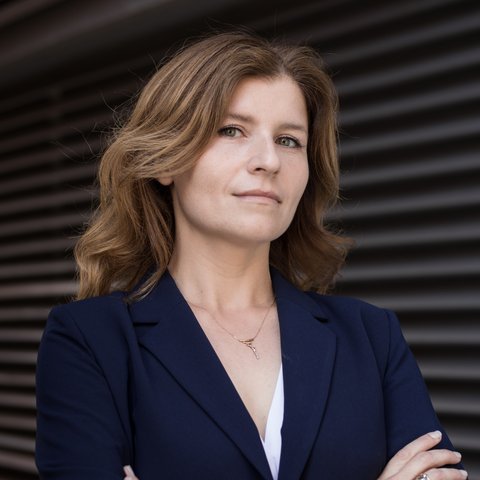

Decoding Cybersecurity: How Zuzanna Wiśniewska Transforms Complex Tech into Human Voice
Instead of designing landscapes, she preferred exploring what lies under the hood of computers and how system registry works. She learned version control at Rails Girls workshops and eventually left a job at a large logistics company to become a technical writer. Today, at Fudo, Zuzanna Wiśniewska translates complex code and Privileged Access Management mechanisms into precise, clear language.
In this conversation, Zuzanna talks about her unconventional path to cybersecurity, working with developers without feeling inadequate, dropping her social mask in the IT world, and how technological knowledge helps her stay calm in an era of growing cyber threats.
From Landscape Architecture to Encrypted Systems
Although Zuzanna studied the arts – she graduated in landscape architecture – technology was always in the background. In high school, when she got her first computer, she was deeply frustrated by not knowing how the machine under the casing worked. Through trial and error, she explored the secrets of hardware and operating systems and became the natural at-home tech support.
Her early career involved presales and technical support for architectural software, as well as conducting AutoCAD training. That’s when she first heard about the emerging role of a technical writer in Poland – a rare profession at the time, mostly pursued by linguistics graduates.
This breakthrough came when, after intense work in logistics, she decided to look for a job that better suited her interests. While on maternity leave – proving that active motherhood can go hand in hand with developing new skills – she attended Rails Girls workshops, where she learned the basics of Ruby and version control systems. This knowledge, combined with a knack for technology and strong communication skills, led her to her first cybersecurity company, which designed advanced encryption hardware.
“When I worked in logistics, I felt tired of the repetition. My husband asked me then: ‘What would you like to do in life?’ I answered that I had no idea. Today, if asked the same question, I answer without hesitation: to be a technical writer. I found my Holy Grail – a job that gives me satisfaction and plenty of technological excitement every day,” Zuzanna recalls.
Deep Dive in Code and Test Environments
As a technical writer in the cybersecurity industry, you don’t just passively edit developers’ notes. Zuzanna emphasizes that the key is a deep understanding of the subject matter. At Fudo Security, this means regularly reviewing source code, configuring her own test environments, and verifying how protocols work in a live system.
“What gives me the most joy is using developer tools and asking the creators how a specific feature was built. If, after an hour of trying, I manage to set up an environment, connect via a specific protocol, and check how the mechanism actually works, I feel an immense joy. I know then that I am taking full responsibility for every word I put into the documentation,” she explains.
A technical writer must act like a translator: taking the engineers’ language and translating it into concrete use cases for the end user. After all, a configuration manual error directly costs the client time.
Zuzanna admits that starting in an environment full of outstanding specialists – theoretical physicists or former CERN employees – left her feeling her knowledge was insufficient. The breakthrough came with a change in perspective:
“After a year, I realized I didn’t have to know everything. I’m not a developer or a designer of encryption hardware. My job is to extract that knowledge and structure it so administrators can understand how a given setting will affect their network’s security. Since then, I have no hesitation in telling the creators: ‘I don’t understand this, explain it to me.’”
How the IT World Became a Safe Haven
For Zuzanna, entering the tech industry became more than a career change – it was about finding her place. Growing up in a smaller town, she felt for years that her passions differed from those of her peers. Instead of talking about cosmetics, she preferred playing video games and discussing fantasy or new hardware.
“For years, I operated in masking mode. When you’re a girl, and you feel that your interests deviate from the norm, you learn to compensate and pretend to be someone else to blend in with the group. I was always on the sidelines. It wasn’t until I got into IT and cybersecurity that I felt a profound relief. Suddenly, I found myself among incredibly curious people with whom I could talk freely about anything,” says Zuzanna.
The freedom to be herself translates directly into her daily work. Her openness and natural curiosity help her build relationships with software creators, who gladly share their knowledge with someone genuinely eager to understand their work.
Smart Habits Instead of Cyber Fear
Experience in the cybersecurity industry changes how you navigate the internet every day. Above all, it dispels fears by helping distinguish mass, primitive phishing from real threats. At the same time, it teaches useful, healthy habits that Zuzanna tries to pass on to her loved ones.
In her daily online life, Two-Factor Authentication is a good, natural practice for important accounts. Zuzanna also ensures her family members’ national ID numbers are locked in the government system, a relatively simple but highly effective step to protect against financial fraud.
Referring to high-profile attacks on Polish medical facilities and invoicing systems, Zuzanna notes the broader geopolitical context:
“Since the outbreak of the war across our eastern border, the number of cyberattacks has skyrocketed. Governments and affiliated groups use them to destabilize public mood and undermine trust in institutions. On the other hand, our sensitive data is the modern gold – criminals trade it on the black market, profiling databases for future campaigns.”
When asked what concerns her most about modern technology, she points to artificial intelligence tools used for voice and image cloning. Combined with social engineering, these hit the most sensitive spots – emotions and concern for loved ones’ safety.
Her answer to these challenges, however, isn’t digital escapism or disconnecting from the web, but common sense. Establishing a simple “emergency password” with family, building the habit of calling an institution’s official number when in doubt, and pausing before clicking a link – these steps let us enjoy technology’s convenience safely, without unnecessary stress.